

Executive Summary
Persistent geopolitical tensions have kept global tungsten prices elevated, pushing tungsten carbide (WC) and metal cutting tools into a strong upward price cycle. Leading Chinese carbide tool manufacturers including Huarui Precision have issued multiple price hikes to offset raw material inflation. Meanwhile, Okoyo’s Q1 2026 financial forecast shows a 20-fold year-on-year profit increase, marking a clear industry shift: Chinese manufacturers with advanced coating technology and optimized tool structures are rapidly replacing high-priced Japanese and European imported tools.Based on full 2025-year and Q1 2026 customs trade data, this article deeply analyzes the import and export patterns of coated carbide tools and non-coated general cutting tools. It also explains how China’s 2026 tungsten export controls on Japanese military-related enterprises create a historic import substitution window for Chinese carbide tools, providing practical TCO reduction strategies for global metalworking sourcing managers.
1. Coated Carbide Cutting Tools: Import & Export Market Analysis
1.1 Import Market: High-End CNC Demand Drives Continuous Import Growth & Stable Premium Pricing
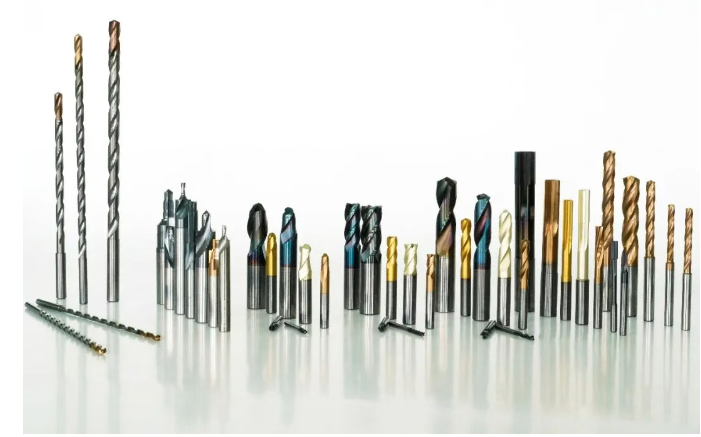
Coated carbide tools represent the mid-to-high-end segment of CNC machining consumables, featuring high hardness, wear resistance, and precise surface finishing performance. In 2025, China’s total import volume of coated carbide tools reached 755.32 tons. In Q1 2026, imports grew 28.82% year-on-year to 209.76 tons, reflecting strong rigid demand from domestic high-end manufacturing upgrades.From 2022 to Q1 2026, the average import price of premium coated carbide tools has remained steadily above $0.53 per gram, maintaining a high premium price range. The import market is highly concentrated, mainly supplied by industrial powerhouses including Japan, Sweden, Germany, and Israel. In 2025, Japan’s single import value reached $1.096 billion, while the total import value of the four top foreign brands hit $2.93 billion, forming a long-term foreign oligopoly in high-end coated tool segments.The high import volume and premium price prove that domestic high-end automotive, aerospace, and precision mold manufacturing still relies heavily on imported coated tools. As Chinese factories achieve breakthroughs in independent coating technology and batch stability, domestic coated carbide tools will become the most cost-effective import substitution solution for global buyers.
1.2 Export Market: Volume Declines While Unit Price Rises, Global Buyers Accept Cost Hikes
In 2025, China’s coated carbide tool export volume reached 1,583.12 tons. Q1 2026 export volume dropped 5% year-on-year to 364.16 tons. The export volume decline is mainly caused by tightened tungsten export regulations in 2025, rapid tungsten price inflation in early 2026, domestic manufacturers prioritizing high-margin local orders, and temporary overseas stocking slowdowns.Nevertheless, the export unit price increased significantly in Q1 2026. Rigid global CNC machining demand enables Chinese suppliers to smoothly transfer rising tungsten raw material costs to downstream markets. Chinese coated tools are widely exported to Russia, India, and dozens of emerging industrial countries with highly diversified market distribution, effectively avoiding single-country market risks and ensuring stable long-term export demand.
2. Non-Coated General Cutting Tools: Import Surge & Record-Breaking Export Unit Value
2.1 Import Side: Q1 2026 Import Volume Surged 55.03%, Japan Dominates the Market
Full-year 2025 non-coated tool imports totaled 591.58 tons. Q1 2026 import volume jumped 55.03% year-on-year to 189.45 tons. The sharp import growth results from robust domestic industrial production and rising tungsten costs, which increase short-term reliance on imported general-purpose tools.The non-coated tool segment has lower technical barriers and lower average prices compared with coated tools. Japan holds an absolute monopoly: its 2025 import value of $1.007 billion exceeds the total import value of all other countries combined. With China’s tungsten supply restrictions on Japan continuing, Japanese tool manufacturers face severe raw material shortages, creating unprecedented import substitution opportunities for Chinese general cutting tool producers.
2.2 Export Side: China’s Global Supply Advantage Consolidates, Export Price Hits Multi-Year High
China’s non-coated tool export volume far exceeds import volume, forming a stable global supply advantage. In 2025, exports reached 1,836.41 tons; Q1 2026 exports fell 8.59% year-on-year to 424.69 tons, but the average export price climbed to a multi-year peak of $0.07 per gram.The simultaneous price increase of both coated and non-coated tools verifies that global machining buyers have strong acceptance of cost-driven price adjustments for Chinese carbide tools. Chinese non-coated tools are exported to highly dispersed global markets, mostly tungsten-resource-deficient developing countries, ensuring sustainable and stable overseas order demand.
3. China’s Tungsten Chain Dominance & 2026 Japan Export Controls Accelerate Import Substitution
China controls more than 80% of global tungsten production and consumption, occupying an absolute core position in the entire tungsten industrial chain. In 2026, China implemented targeted dual-use export control policies targeting Japanese military-related enterprises:
- January 2026: Tungsten-based dual-use materials are prohibited from being supplied to Japanese military end-users and military-enhancing applications.
- February 2026: 20 Japanese military-supporting enterprises including Mitsubishi Heavy Industries were added to the export control list, directly impacting Mitsubishi Materials, Japan’s top carbide tool manufacturer.
Japanese carbide producers rely on China for over 80% of tungsten feedstock. Supply restrictions force Japanese brands to purchase high-cost alternative tungsten resources, leading to skyrocketing production costs, extended delivery cycles, and continuous price hikes. Global buyers are rapidly shifting orders from expensive, supply-unstable Japanese and European tools to cost-effective and stable Chinese carbide tools, driving explosive profit growth for leading domestic brands such as Okoyo and Huarui Precision.

4. TCO Optimization Solutions for Global Machining Buyers in High Tungsten Price Cycles
Facing sustained tungsten price inflation, simply replacing tool brands cannot fundamentally reduce costs. Global manufacturers need systematic TCO optimization solutions to lower carbide material consumption and improve machining efficiency.
- Upgrade to indexable multi-edge milling cutters: Double-sided 12/14-flute indexable inserts maximize cutting performance under the same tungsten consumption, greatly improving material utilization.
- Adopt indexable corn roughing cutters: Steel body reusable, only replaceable carbide inserts wear out, reducing carbide consumption by over 80% and overall roughing cost by more than 60%.
- Apply modular exchangeable head tools: Solve high-precision small-diameter machining pain points, avoid overall solid carbide waste, and balance accuracy and cost control.
- Full-lifecycle tool service: Professional tool regrinding, recoating, and tungsten scrap recycling restore 70%–80% of new tool performance and effectively reduce long-term procurement costs.
Get Custom Carbide Tool Sourcing & TCO Optimization Solutions
Tired of high-cost, supply-unstable Japanese and European imported carbide tools? Facing rising tungsten prices and increasing machining consumable costs? Our professional carbide tool sourcing team provides verified Chinese factory audit services, free sample testing, customized TCO cost-down schemes, and one-stop export support.